
English| EUR
Suggested for you
More currencies
Choose a language
Gold Dredge 8 offers every visitor a chance to pan authentic pay dirt from the Alaska gold fields. The technique is simple to learn but rewards patience and the right motion. This guide covers the fundamentals that separate empty pans from keepers.
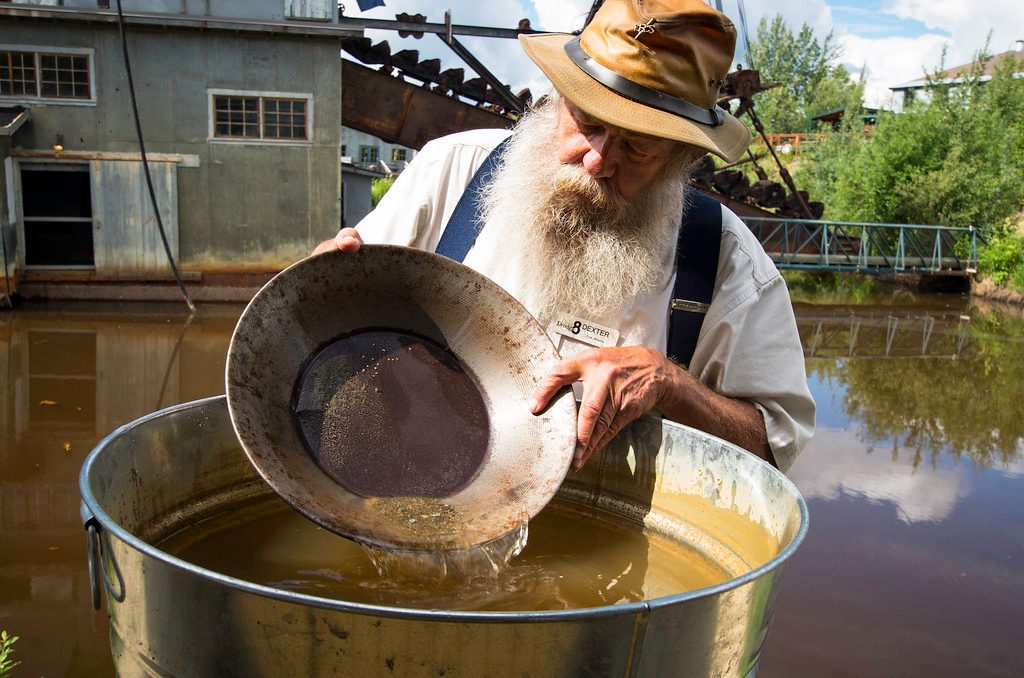
Quick answer
Successful panning starts with the right shake: a side-to-side swirl that lets heavy gold settle to the bottom while lighter gravel washes over the rim. Keep the pan submerged, tilt it slightly forward, and work in smooth circular motions. Gold is 19 times denser than water—it sinks fast and stays put when other material floats away.
Gold is the densest material in an Alaska creek bed, which makes panning less about luck and more about physics. A flake of gold weighs nineteen times more than an equal volume of water and roughly seven times more than quartz gravel. That single property drives every motion in the pan. The process begins with classification—breaking apart clumps and removing rocks larger than a marble. Once the material is loose, submerge the pan completely and start a rhythmic side-to-side shake that mimics the action of a sluice box. The goal is to let gold migrate downward through the lighter sediment. After twenty or thirty shakes, tilt the pan forward just enough to let water carry the top layer of gravel over the lip. Repeat this cycle, always keeping the pan underwater, always swirling before you tilt. Guides at Gold Dredge 8 demonstrate the cadence during the two-hour tour, and most visitors find color within their first few pans. Recognizing gold in the pan requires adjusting your expectation of size. Flour gold—particles finer than granulated sugar—is common in Fairbanks pay dirt, and it clings to the black sand that collects in the bottom curve of the pan. A loupe helps, but even without magnification, gold's yellow luster stands apart from mica's flat silver sheen. If a fleck reflects light from every angle and doesn't crumble when nudged with a fingertip, it's worth keeping. The historic dredge processed this same ground between 1928 and 1959, and the pay dirt visitors work today comes from active mining claims in the region. Every pan holds the possibility of color, but the real reward is understanding the method that powered Alaska's economy for a century. Panning is a threshold skill—once the rhythm clicks, the motion becomes automatic, and the focus shifts entirely to reading the material in the pan.
“Gold is 19 times denser than water—it sinks fast and stays put when other material floats away.”
Mastering the mechanics of the pan helps ensure you retain the gold flakes hidden within your gravel concentrate.
Start by fully submerging your pan in the water trough to break up compacted clay and dirt. This allows heavier gold particles to settle toward the bottom of the pan before you begin the washing process.
Move your pan in a gentle circular, swirling motion to encourage the lighter sand and gravel to wash over the rim. Keep the pan level to prevent the gold from accidentally washing out with the lighter material.
Pay close attention to the material left at the bottom of your pan as the gravel volume decreases. Gold is significantly heavier than surrounding rocks and will be one of the last materials remaining in the riffles.
Periodically scrape off the top layer of light sand once the bottom looks concentrated. Repeat the swirling process until only the heavy black sand and potential gold flakes remain.
Before discarding any material, perform a final check around the rim and corners of your pan. Gold often hides in the shadows of these edges, particularly if the pan was tilted too aggressively.
To ensure a complete experience including the gold panning demonstration and museum tour, the best arrival window is between 10:30 and 14:00. This timeframe aligns with scheduled tour departures, allowing visitors to participate in all core activities without interruption.
High 60s to 70s F
Peak visitor numbers occur during these months.
—
Arriving between 10:30 and 14:00 aligns with tour schedules.
—
Mid-week slots often offer more space at the panning troughs.
Verdict: Plan your visit between 10:30 and 14:00 on any weekday to maximize access to the gold panning activities.
Gold Dredge 8 maintains consistent operating hours throughout the week to accommodate visitors. The facility remains accessible daily to ensure opportunities for panning and site exploration.
Gold Dredge 8 is located at 1803 Old Steese Highway North, Fairbanks, AK 99712. The most direct approach for visitors is by personal vehicle or taxi, as the site is situated north of downtown Fairbanks.
Follow Old Steese Highway North directly to the site
Request transport to 1803 Old Steese Highway North
Parking is available on-site for visitors arriving by car. Aim to arrive during the recommended window of 10:30 to 14:00 to align with scheduled tour departures and ensure access to the full experience.
Even with gold present in every pan at Gold Dredge 8, poor panning mechanics send flakes over the edge. These errors account for most empty pans among first-time visitors.
Shaking the pan instead of swirling it in circles
Gold settles by gravity and circular motion, not agitation. Use smooth, consistent circular swirls to let heavy material migrate to the bottom while lighter sediment washes over the rim.
Tilting the pan too steeply during the wash phase
A steep angle dumps gold along with gravel. Keep the pan nearly level during initial swirls, then tilt only 10–15 degrees as you wash lighter material, increasing the angle gradually as the load lightens.
Discarding the black sand concentrate at the bottom
Black sand contains magnetite and hematite—both heavier than most rock but lighter than gold. The final teaspoon of dark material in your pan is where the gold hides. Inspect it closely under water before declaring the pan empty.
Rushing through the final separation without adding clear water
Murky water obscures flakes and makes the final pick nearly impossible. Once you're down to black sand and potential gold, add clean water and use gentle side-to-side tilts to spread the material into a thin crescent where gold becomes visible against the pan surface.
Everything you need to know about gold panning tips
To succeed with gold panning tips, focus on keeping your pan level and using the water to wash away lighter sediment. Consistent motion helps settle the heavy particles at the bottom of the pan. Many guests find that learning these gold panning tips helps them recover more flakes during their visit.
When practicing gold panning techniques here, you will use a provided trough system designed for efficiency. Instructors provide hands-on gold panning tips to ensure every visitor has a successful experience. You do not need prior experience to participate in these Fairbanks gold mining tours.
All necessary tools, including pans and pay dirt, are provided on-site, so there is no need to bring personal gear for your gold panning tips session. This inclusive approach makes it easy for visitors to focus on the process. Simply arrive ready to sift through the gravel and enjoy the historical gold dredging atmosphere.
For the optimal experience with your gold panning tips, plan to arrive between 10:30 and 14:00. This window aligns with scheduled tour departures to ensure you have sufficient time for the museum and the mining demonstration. Adhering to this timeframe helps you avoid the busiest periods and ensures a full visit.
The gold panning activity is highly accessible and enjoyable for children, making it a popular choice for families seeking educational Alaska landmarks. Instructors provide simple gold panning tips that are easy for younger guests to follow while searching for their own treasures. It serves as a memorable, hands-on history lesson for all ages.
A common error visitors make is washing away the pay dirt too aggressively, which can cause gold to escape along with the silt. Reviewing basic gold panning tips beforehand helps you maintain better control over the material in your pan. Take your time to carefully inspect the remaining concentrate at the bottom of your pan.
The entrance fee for a 2-hour tour starts at approximately 91.8 USD. Please verify the specific date and time of your planned visit to confirm the exact rate before you finalize your travel plans. This fee grants access to the full experience, including the informative gold panning tips and the historic dredge site.