
English| EUR
Suggested for you
More currencies
Choose a language
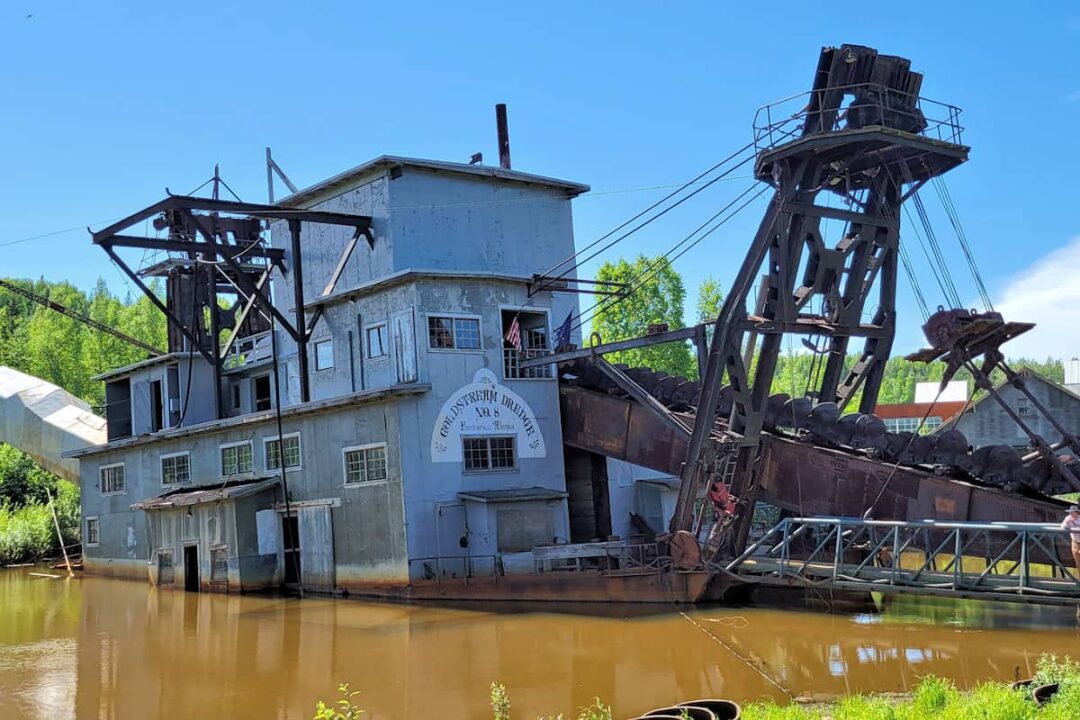
Gold panning at Gold Dredge 8 operates under a controlled tour framework that sidesteps most permitting requirements. Outside the site, Alaska's public lands follow a tiered system: hand tools require no permit on most BLM and state ground, but motorized equipment, active claims, and protected waterways each carry their own restrictions.
Quick answer
Gold panning laws at Gold Dredge 8 allow visitors to pan for gold as part of the paid tour without obtaining separate permits, since the activity occurs on private property under the operator's authorization. Off-site in Alaska, recreational hand-panning with non-motorized tools requires no permit on most Bureau of Land Management and state lands, though you must avoid active mining claims and obtain landowner permission on private ground. Suction dredges require a free Alaska Department of Fish and Game permit plus a small annual fee.
Alaska remains one of the few states where recreational miners can work public ground without advance paperwork, provided they stay within narrow equipment and land-use boundaries. That openness traces back to federal mining law and state statutes designed to encourage small-scale prospecting, but the simplicity ends the moment a pan becomes a sluice box or a creek crosses into state park jurisdiction. Gold panning laws hinge on three variables: the land type beneath your boots, the tools in your hands, and whether someone else holds a claim to the ground. On open BLM land and most state parcels, a prospector using only a pan, shovel, and hand sluice operates legally without a permit. The regulations shift once motorized equipment enters the equation—suction dredges under four inches require a habitat permit from Fish and Game, and anything larger triggers additional reviews. Active mining claims, marked by corner posts and recorded with the state, are off-limits without written consent from the claimholder, and Alaska Native corporation lands count as private property where trespassing rules apply in full. Panning regulations for Alaska also restrict where material can be disturbed. State park rules prohibit extraction above the ordinary high-water line or in areas with live vegetation, a measure intended to protect riparian zones and prevent erosion. On some federal lands, including portions of the White Mountains and along the Dalton Highway, the Bureau of Land Management designates specific drainages open to casual use, while others remain closed to protect salmon streams or cultural sites. The line between legal and prohibited ground is rarely marked in the field, so checking land status maps through the state Division of Mining, Land and Water or the BLM Alaska office before heading out is standard practice among experienced panners. At Gold Dredge 8, these regulatory layers collapse into a simpler structure. The tour operates on private ground where the site holds all necessary authorizations, and participants pan paydirt provided by the operator rather than disturbing native streambed material. The gold recovered belongs to the panner, a departure from the rules governing some recreational sites on state land where removal limits apply. The controlled environment also means no claim-staking conflicts, no fish-habitat reviews, and no question about whether the creek you are working falls inside a closure zone. For visitors unfamiliar with Alaska's claim system or uncomfortable navigating the state's patchwork of land jurisdictions, the guided framework offers a low-risk introduction to the mechanics of panning without the legal research that independent prospecting demands.
“On open BLM land and most state parcels, a prospector using only a pan, shovel, and hand sluice operates legally without a permit.”
Gold Dredge 8 operates on a consistent schedule seven days a week to accommodate visitor panning and tours.
Entrance to Gold Dredge 8 is free. All gold panning activities are conducted exclusively through organized tour packages.
Verdict: While facility entry is 0 USD, visitors pay for organized tour packages which include the gold panning experience.
Gold Dredge 8 is located at 1803 Old Steese Hwy N, Fairbanks, AK 99712, USA. The site is most easily accessed by car, situated just off the main highway north of downtown Fairbanks.
Follow Old Steese Hwy N toward the Gold Dredge 8 sign
Request transport to 1803 Old Steese Hwy N
Visitors should plan their arrival between 09:00 and 14:00. Arriving within this window is necessary to allow sufficient time for the two-hour tour duration before the site closes.
The best time to visit Gold Dredge 8 is during the 09:00–14:00 window to ensure sufficient time for the two-hour tour experience. Planning your arrival within this morning period helps you navigate the site logistics efficiently before daily operations conclude.
Mild, 60°F–75°F; plan for daylight.
High season brings consistent operations but larger groups.
Cooler, 40°F–55°F; prepare for brisk air.
Shorter days mean limited afternoon availability for tours.
—
Arriving at 09:00 provides the most consistent access to staff for questions regarding local panning regulations.
Verdict: Arrive between 09:00 and 14:00 on any weekday during the main summer season for the most comprehensive experience.
Everything you need to know about gold panning laws
Gold panning laws in Alaska vary significantly depending on whether you are on public or private land. Generally, recreational panners must ensure they are not trespassing on valid mining claims held by others. It is important to research land status before attempting to pan anywhere outside of designated commercial operations. Gold panning laws often involve specific environmental protections to prevent sediment pollution in local streams and rivers. While these regulations are essential for prospectors, they do not impact guests at Gold Dredge 8. Our attraction provides a curated experience where you can pan in designated troughs as part of a structured excursion, meaning you do not need to worry about personal claim filings. Gold panning laws are designed to manage mineral rights, but our site operates under a private land use agreement that simplifies the process for visitors. Your tour package covers all necessary access to the gold-bearing materials provided. Guests are encouraged to keep the gold they find during their session, as this is included in the excursion experience. Professional staff are on hand to ensure safety and provide guidance on proper panning techniques. You should familiarize yourself with state-wide recreational prospecting rules if you plan to visit natural creek beds after your tour. Most areas require adherence to the Alaska Department of Natural Resources guidelines regarding fish habitat and water quality protection.